Human Trafficking: Philanthropic Awareness, Action, & Impact
Stories & Perspectives

“I want to bring hope to the room. The way we push forward is that every person in this room and the people we know can do something. When we come together, more unique solutions are developed to tackle this dark issue. By focusing on hope we can impact change.”
Timeka Walker, L.M.S.W. CEO at United Against Human Trafficking
The Houston Philanthropy Circle and Greater Houston Community Foundation hosted a powerful panel discussion on human trafficking, an issue that deeply affects the greater Houston region.
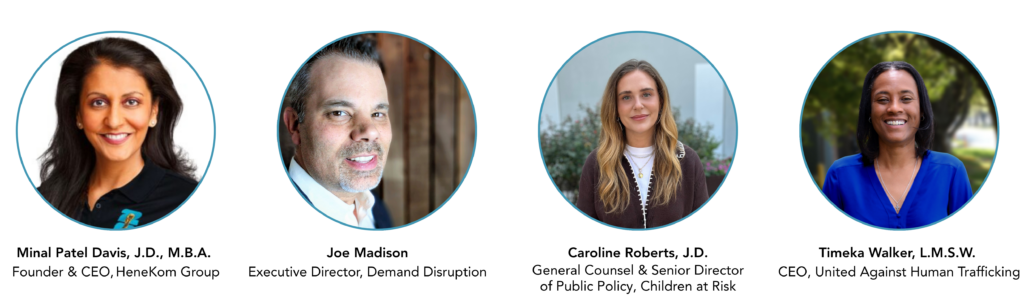
Each panelist is an issue-area expert bringing about systems change within this field to prevent exploitation, support survivors, and influence policy. Collectively, their skills and talents place them on the front lines of nonprofit collaboration, ending demand, state and federal advocacy, and service provision to Survivors. Continue reading to discover meaningful ways you can get involved, support survivors, and restore individual dignity and freedom.
Click here to read more about each panelist.
What is human trafficking?
As defined in the Trafficking Victims Protection Act of 2000, the legal definition of “severe forms of trafficking in persons” is:
- sex trafficking in which a commercial sex act is induced by force, fraud, or coercion, or in which the person induced to perform such an act has not attained 18 years of age; or
- the recruitment, harboring, transportation, provision, or obtaining of a person for labor or services, through the use of force, fraud or coercion for the purpose of subjection to involuntary servitude, peonage, debt bondage, or slavery.
Under the legal definition, trafficking victims in the U.S. can be divided into three populations:
- Minors (under age 18) induced into commercial sex;
- Adults age 18 or over involved in commercial sex via force, fraud, or coercion;
- Children and adults forced to perform labor and/or services in conditions of involuntary servitude, peonage, debt bondage, or slavery, via force, fraud, or coercion.
The Cycle of Exploitation
Human trafficking operates through a relentless cycle of exploitation. Victims can be caught up in overwhelming fear or total dependence on their abuser, making it feel nearly impossible for them to break free. Recovery is often a long process, as physical and/or psychological effects are addressed.
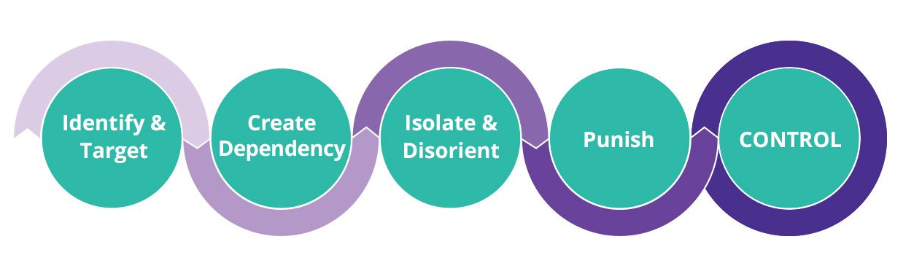
Individuals who have survived trauma and exploitation often encounter ongoing, complicated obstacles. Without comprehensive, wraparound support, they remain at significant risk of being victimized again.
Collaboration in Houston
Timeka Walker, L.M.S.W. CEO at United Against Human Trafficking shared how ending human trafficking demands coordination across nonprofits, public agencies, and community partners so that prevention, identification, and survivor support can connect seamlessly, without gaps. Combating human trafficking cannot be done effectively in isolation.
In Greater Houston, United Against Human Trafficking helps strengthen that coordination by convening nonprofit partners, aligning services, and reinforcing a shared, survivor-centered approach in numerous ways, including:
- Forming a regional coalition: Bringing together 50+ member organizations working to collectively end human trafficking in Greater Houston and Lake Charles. This coalition helps its members build relationships, reduce duplication, and improve service referrals.
- Coordinating trauma-informed direct services and programs: Survivors and those at risk can access safe, healing-centered support designed to meet immediate needs while promoting long-term stability.
- Providing wrap-around case management: Case management for survivors (18+) can connect individuals to counseling, advocacy, ESL classes, financial literacy, job readiness, and safe housing, enabling people to rebuild independence and interrupt the cycle of exploitation. Survivors gain tools, build healthy, supportive relationships, and access resources needed for long-term stability and healing.
- Partnering with law enforcement and service providers: Ongoing cross-training and collaboration with local agencies, including the Houston Police Department, to help improve survivor identification. The training reinforces that survivors are victims, not perpetrators. This collaboration has helped elevate survivors’ voices in our region’s first-response efforts.
“Think about someone you love, someone you care about that could be at risk. By elevating our love for humanity, we can recognize what we have in common with survivors; we can bring light into the darkness.”
Timeka Walker, L.M.S.W. CEO at United Against Human Trafficking
Walker shared how the reality of human trafficking has changed over the last 10-20 years. But through conversation and awareness, we can bring light into the darkness—and everyone can be part of that effort.
Ending Demand
Joe Madison, Executive Director, Demand Disruption, emphasized that human trafficking is sustained by demand. To reduce exploitation, we must answer:
- Why would someone want to buy another person?
- Why is it so easy and acceptable in our culture to do so?
Understanding the motivation of buyers and intervening before a purchase ever happens is essential to disrupting this industry. Madison shared how buyer behavior in the sex trafficking industry often follows an escalation over time starting with exposure to pornography, engagement with webcams, and eventually progressing to paid encounters. Madison also underscored the need for accountability across the adult-content ecosystem as many online platforms tend to normalize and enable exploitation.
Madison called for more honest community-level conversations, paired with personal accountability and trusted relationships that foster growth, challenge harmful patterns, and support change. Madison pointed to practical, scalable strategies that cities can adopt, such as tighter permitting and stronger enforcement practices that, for example, prevent illicit massage businesses from operating or re-opening. While stronger penalties for buying sex may deter demand, Madison argued that enforcement should be coupled with meaningful, evidence-informed intervention and rehabilitation programs.
“If we do not address why people buy sex, we should not expect the behavior (or the harm it causes) to stop.”
Joe Madison, Executive Director, Demand Disruption
Madison reported that the average first exposure to pornography for boys happens around age nine. Protecting boys and “eliminating buyer motivation” means reducing early exposure and interrupting the cultural factors that normalize exploitation. Madison shared several proactive intervention tips:
- Reduce access: Social media and online sexual content can become “tributaries” that feed an escalating cycle of consumption. He described a predatory system in which algorithms and consumer clicks amplify what is most harmful and escalate over time.
- Talk Early: Adults need to help young people build a healthier view of relationships with questions about how they are treating others. Do your actions recognize someone as a whole person or an object? Ground the conversation in identity and purpose and lead with empathy.
- Stay engaged: Secrecy and normalization surrounding this topic sets in quickly. Creating safe, consistent opportunities to talk can help disrupt that pattern. He shared one practical approach: affirm what you already see and value in a young person (“I see how you show up to support your little brother”) and then connect that identity to the choices you hope they will make in their interactions with others.
Advocacy in Texas
Caroline Roberts, J.D., General Counsel and Senior Director of Public Policy at Children at Risk, leads Children at Risk’s human trafficking and opportunity youth work and advocates for policies that positively impact the lives of children. She highlighted a recent win for Texas, effective on September 1, 2025, with House Bill 451. Now, all systems that involve children entering the state’s care (Department of Family and Protective Services or juvenile probation departments) must conduct screenings for commercial sexual exploitation risk.
While Roberts noted this House Bill marks incredible progress, a need remains to standardize how Health and Social Services contractors and case workers are trained in conducting these screenings, so more checks and balances are incorporated, to ensure that the tool is administered properly. Additionally, when a child is identified as high risk, there should be fewer barriers to providing that high-risk child with the services they need; ensuring they do not experience the trauma they are currently at risk of suffering.
Roberts also described the growth of illicit massage businesses in Texas since 2016, tripling in count to roughly 1,500, underscoring how these operations can be connected to both labor and sex trafficking. Survivors may have been initially promised legitimate work such as positions as massage therapists or waitresses and then exploited through document confiscation, coercive control, and abuse. She noted that these illicit massage businesses are even promoted through online directories and review-style platforms.”
“We need a [Texas] House Bill that provides opportunity for better enforcement of the illicit massage businesses. Let’s stop this game of whack-a-mole.”
Caroline Roberts, J.D., General Counsel & Senior Director of Public Policy, Children at Risk
Roberts hopes that a House Bill during Texas’ 2027 legislative session will provide opportunity for better enforcement and consequences for these illicit massage businesses. She expressed how penalty fees for these businesses would make it much more difficult for them to reopen. Honest, community-level conversations help bring critical issues to light and create space for change. Civic action calling for more penalties for these illegal businesses can start at the local level.
She also emphasized the need to hold technology companies accountable for how their platforms enable exploitation. Roberts urged stronger safeguards at the systems level, arguing that design and policy choices should prioritize children’s safety over profit or privacy tradeoffs. More broadly, she stressed that reducing trafficking vulnerability requires strengthening the systems that keep children safe and connected—schools, child welfare and juvenile justice support, and wraparound services- that reduce disconnection from education, work, and stable relationships.
World Cup Preparation
Minal Patel Davis, J.D., M.B.A., Founder & CEO, HeneKom Group, highlighted how labor trafficking is discussed far less often. Labor trafficking involves exploiting individuals for work through force, fraud, or coercion, often by withholding payment or using threats and deceit. This form of trafficking is not limited to undocumented immigrants or people without legal status; it can also affect U.S. citizens, across various industries, and often targets individuals with criminal records or those in marginalized situations.
Davis, as HOU26’s Chief Legacy Officer, works to ensure that responsible contracting policies are in place in Houston for the World Cup. Because of her team’s dedication and action, the Houston host committee for the 2026 FIFA World Cup is committing to requiring vendors to provide a $15 hour minimum wage and certain anti-trafficking guidelines. While the Houston host committee is committed to fairer wages, especially within its 39-day FIFA Fan Festival Houston, labor exploitation can still happen through businesses that do not operate under the hosting agreement. Davis pointed to the 2022 Qatar World Cup, where labor trafficking and labor‑related deaths were widespread, emphasizing that Texas is focused on identifying and eliminating these vulnerabilities in our city’s World Cup participation.
Another piece of human rights due diligence is providing access to remedy. To that end, HOU26 has also established a Worker Support Hub within the Fan Festival footprint and will conduct culturally competent outreach to employees to ensure fair treatment and payment. Davis shared that vendor contracts include accountability measures. With these measures, she hopes to bring resolution to labor related issues that arise, ensuring no complaints to go unresolved.
Davis had many positive things to say about how Houston is working to host the World Cup responsibly this summer. She also highlighted that because of Houston’s strong ecosystem of organizations and people combatting human trafficking, should any sex trafficking grievances occur, she will lean on our established infrastructure to ensure survivors are connected with appropriate resources.
“The Houston Host Committee has so easily agreed to do all of these things and more across the FWC26 human rights framework. We’ve assessed the human rights risk, developed ways to mitigate those risks, and have a grievance process that is currently being established. This is going to be a world class World Cup.”
Minal Patel Davis, J.D., M.B.A., Founder & CEO, HeneKom Group
Click here to read the human rights action plan. The plan addresses the issues discussed in this article and also addresses accessibility, freedom of speech, unsheltered populations and more.
Other Barriers to Progress
Society’s Mindset
Society also shapes the demand that fuels exploitation. As Davis noted, our culture can be permissive treating the purchase of sex, including through illicit massage businesses, as acceptable. That mindset is reinforced by media and cultural messages that normalize the objectification of women and girls.
Community-Led Prevention
Lasting change also requires community-led prevention and accountability, especially in families, schools, and places of worship. When we challenge harmful norms and invest in dignity and safety, we can interrupt cycles of exploitation and build a more hopeful future.
Training
Nurses, medical assistants, and more first responders, who are commonly working directly with survivors, need further training on not only how to identify a survivor, but also how to provide them with a trauma-informed response and connecting them with the services they need.
General Operations
Many of the agencies that provide critical support to victims or are combating exploitation are using valuable time, personnel hours, and resources to demonstrate the impact of their programs and why they should be funded. While these metrics are important, a lot of time and resources are channeled into showing where their programs are working, instead of being dedicated to expanding mission-critical work.
Housing
When a survivor is no longer under control, a top priority is stable housing. By providing a safe, stable home, where rent can be covered consistently, survivors are far less likely to be forced or feel compelled to return to a trafficker. Many survivors have never had a home of their own and may have lived under someone else’s physical control, so securing a safe place to land is foundational to recovery. Alongside housing, survivors often need immediate basics (like toiletries).
What You Can Do Next
Contribute
There are many nonprofits working against human trafficking from prevention to post-rescue. Below is a sample of the robust anti-trafficking nonprofit network working across Texas that were referenced during the program. This list is not inclusive of all nonprofits working to combat human trafficking:
- Children at Risk
- Demand Disruption
- Elijah Rising
- Redeemed Ministries
- The Landing
- Unbound Now
- United Against Human Trafficking
- YMCA International Services
Policy & Civic Action
- Learn about and support legislation that helps lawmakers and policy makers put a stop to this industry and better support Victims and Suriviors, through Children at Risk.
- Align with other philanthropists for coordinated giving and learning or contribute to a collective giving fund focused on anti-human trafficking efforts. For more information, contact Rebecca Hove.
- Become an Emergency Safe Home volunteer during the World Cup with Elijah Rising.
Additional Learnings
- Take a Trafficking Tour: In Houston with Elijah Rising(in a safe, learning environment).
- Make Survivor “Life-kits”: Basic-necessities and encouraging words via The Landing.
- Programs by the State of Texas: Via the offices of the Governor and Attorney General.
- Read: Kevin Bales’ Disposable Peopleprovides a good global overview and really started the modern-day anti-slavery movement. Bales also wrote The Slave Next Door, which covers slavery in the United States.
- Understand the global scale of the problem: Slavery Index by Walk Free.
- Interactive Experience: Slavery Footprint This is web tool allows you to personally calculate how many slaves may have made the products we consume each day.
- Breaking the Business Cycle of Human Trafficking
- TheNetwork (Washington, DC) – Works across the US with strategic focus and coordination to dismantle the Illicit Massage Parlor business.
- Human Trafficking Institute (Dallas, Tx) – Raises awareness & builds skills for law enforcement (locally and internationally) to stop traffickers and the destructive impact of their businesses.
- Polaris Project (Washington, DC) – Committed to combating human trafficking and modern-day slavery, and to strengthening the anti-trafficking movement through a strategic and comprehensive approach.
- Buyer Intervention and recovery: In addition to work by today’s panelists UAHT and Demand Disruption, learn more from: A Call to Men and EPIK.
The Community Foundation remains deeply committed to providing our donors with meaningful programs that do more than raise awareness—they ignite impact. Together, through thoughtful action and purposeful investment, we can transform concern into change and ensure hope leads to lasting freedom.
More Helpful Articles by Greater Houston Community Foundation
- Jennifer Hohman: Fighting Human Trafficking in Houston
- Turning Noncash Assets into Community Impact: A Nonprofit’s Guide
- Unlocking Your Legacy: Impactful Giving Today and Tomorrow
- Economic Mobility Learning Series: Child Poverty Action Lab
This website is a public resource of general information that is intended, but not promised or guaranteed, to be correct, complete and up to date. The materials on this website, including all comments and responses to comments, do not constitute legal, tax, or other professional advice, and is not intended to create, and receipt or viewing does not constitute, nor should it be considered an invitation for, an attorney-client relationship. The reader should not rely on information provided herein and should always seek the advice of competent legal counsel and/or a tax professional in the reader’s state or jurisdiction. The owner of this website does not intend links on the website to be referrals or endorsements of the linked entities.