Purposeful Giving: Texas Hill Country Insight
Community Impact
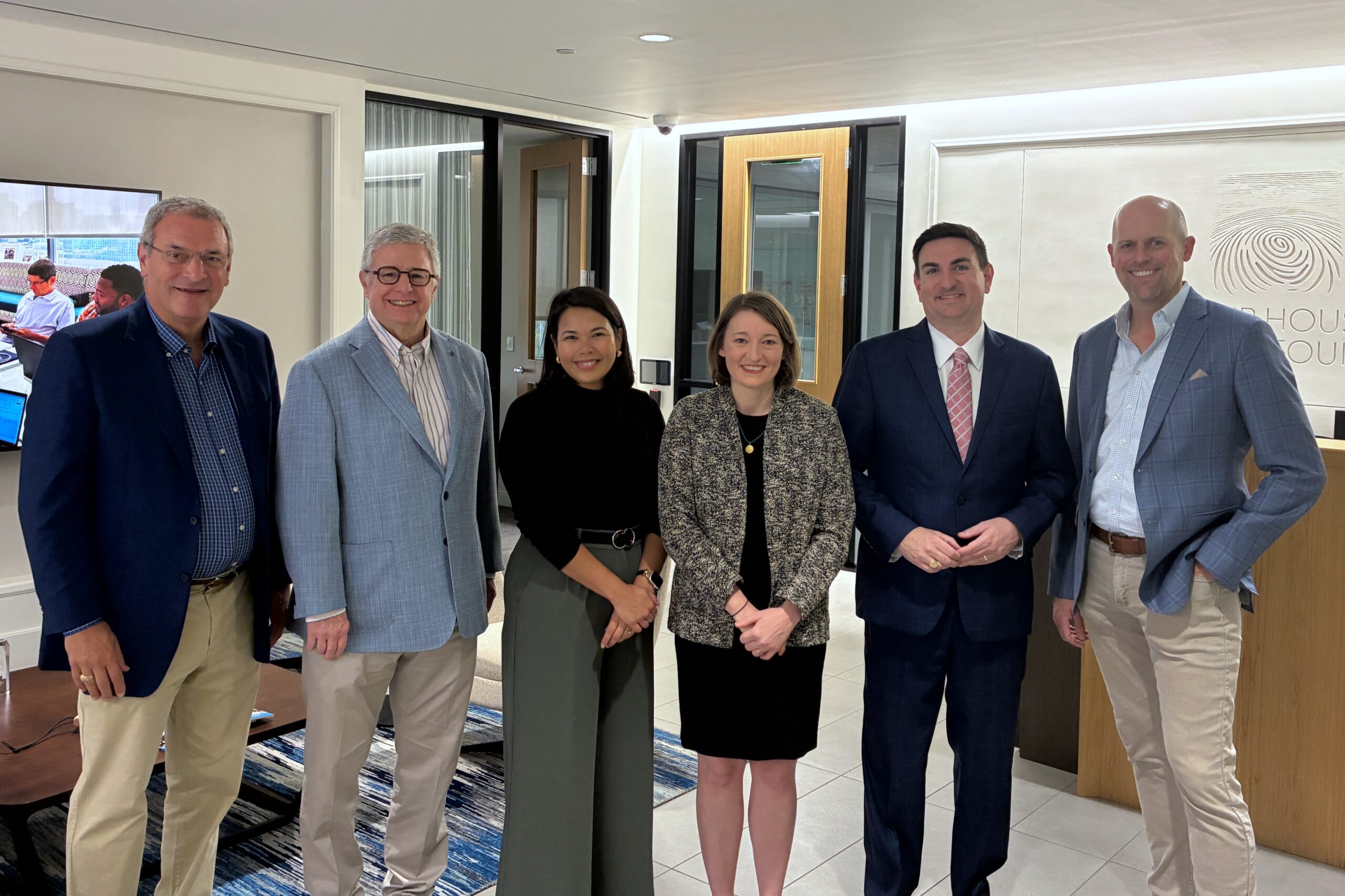
“I’m proud of the things we’ve done, but Houston gave us the infrastructure to do it.”
Austin Dickson, CEO of Community Foundation of the Texas Hill Country
When disaster strikes, it reveals a lot about a community and about the people who choose to show up. The July 2025 floods in the Texas Hill Country brought deep loss, but they also surfaced something enduring: generosity that moved quickly to meet urgent needs and remained committed for the long road to recovery.
Greater Houston Community Foundation organized this program to give donors insight into how their support aided recovery efforts. Leaders closely involved in the response shared firsthand accounts of what unfolded, what ongoing recovery has entailed, and the importance of coordination for achieving measurable outcomes. By fostering transparent discussions, the Community Foundation underscored how donor generosity and collaborative action can drive meaningful, lasting improvements in affected areas, and strengthen community resilience.
This event provided firsthand accounts of the challenges faced, the ongoing needs, and the transformative impact of donor support. By facilitating open dialogue about what transpired on the ground and the complexities of recovery, the Community Foundation demonstrated its commitment to transparency, accountability, and measurable progress. Through this coordinated approach, donors were not only informed but empowered—seeing the tangible outcomes their generosity enabled and the strategic value of unified efforts in delivering lasting change for affected communities.
In this article:
- What we learned about generosity from the Hill Country floods: speed matters, but coordination determines whether giving turns into outcomes.
- Why community foundations are built for crisis: trust and local knowledge help move funds quickly and responsibly.
- What recovery looks like in the Hill Country months later: housing, mental health, and local economies are the long-term work.
- How systems accelerate impact: Connective’s hub-and-spoke model reduces duplication and improves access to services.
- What donors can do next: invest in preparedness and year-round partnerships, not only emergency response.
From Houston Hearts to Hill Country Homes
Austin Dickson, CEO of Community Foundation of the Texas Hill Country(CFTHC), shared firsthand insights on the donor generosity that made recovery possible, and the lessons it offers all of us as we look ahead. Joining him was Elena White, CEO of Connective, a Houston-based nonprofit that strengthens disaster recovery and social services by coordinating partners and building systems that make support easier to access when it matters most.
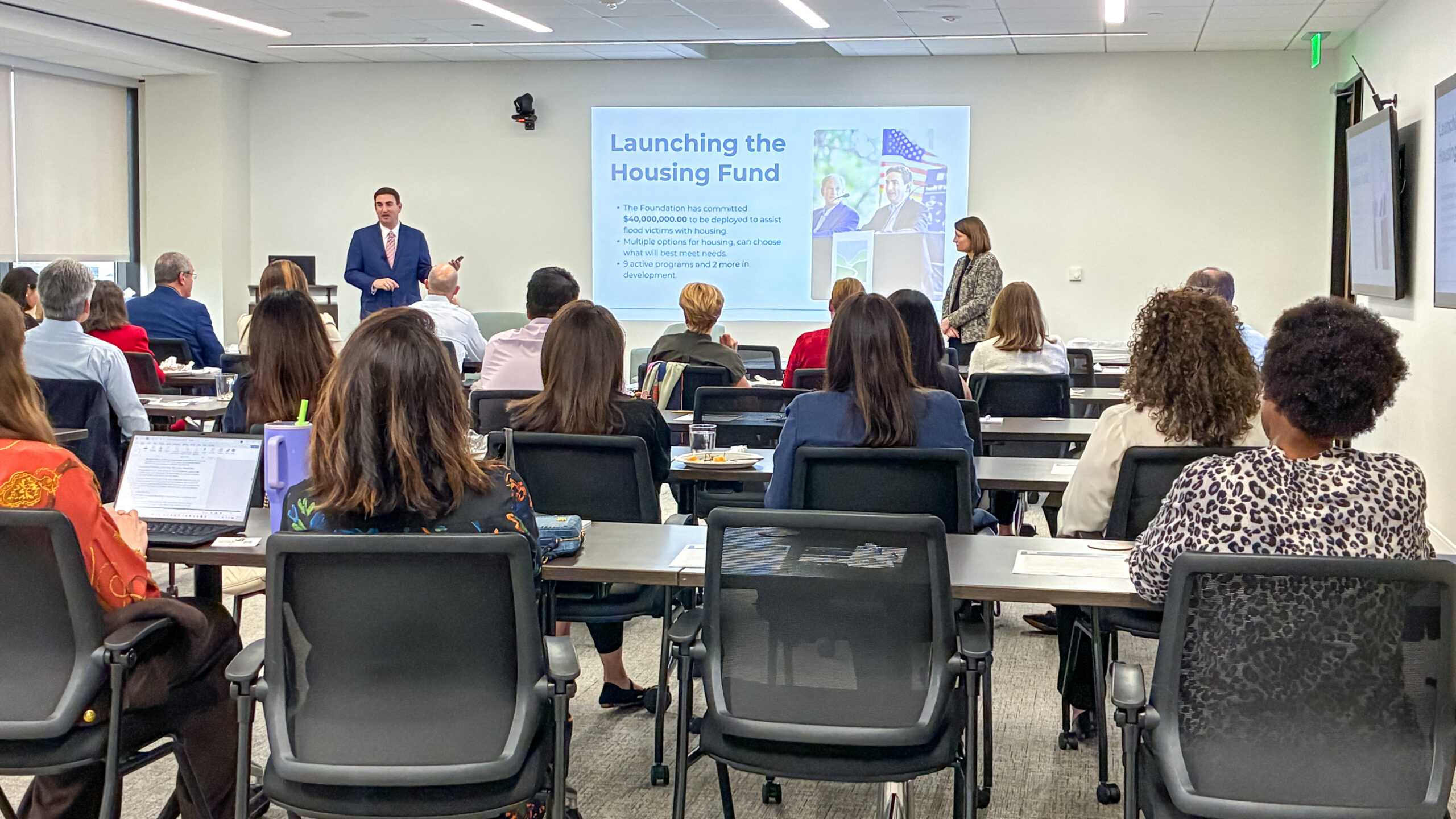
Austin recalled how, in the first hours after the flooding, answers were hard to come by. It was a holiday weekend, information was scattered, and the scale of what had happened in this rural community hadn’t fully registered. “We knew we needed to respond, which our Community Foundation was poised to do,” Austin reflected, thinking about what would become the Kerr County Relief Fund.
“This was a moment to radicalize around the power of community philanthropy. I didn’t know how we would do it, but I had confidence.”
Austin Dickson, CEO of Community Foundation of the Texas Hill Country
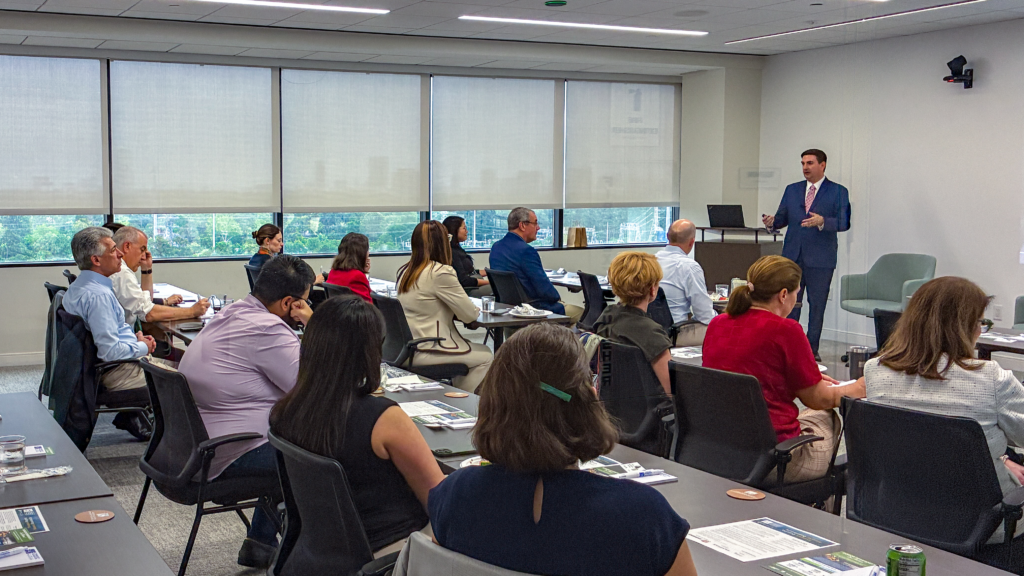
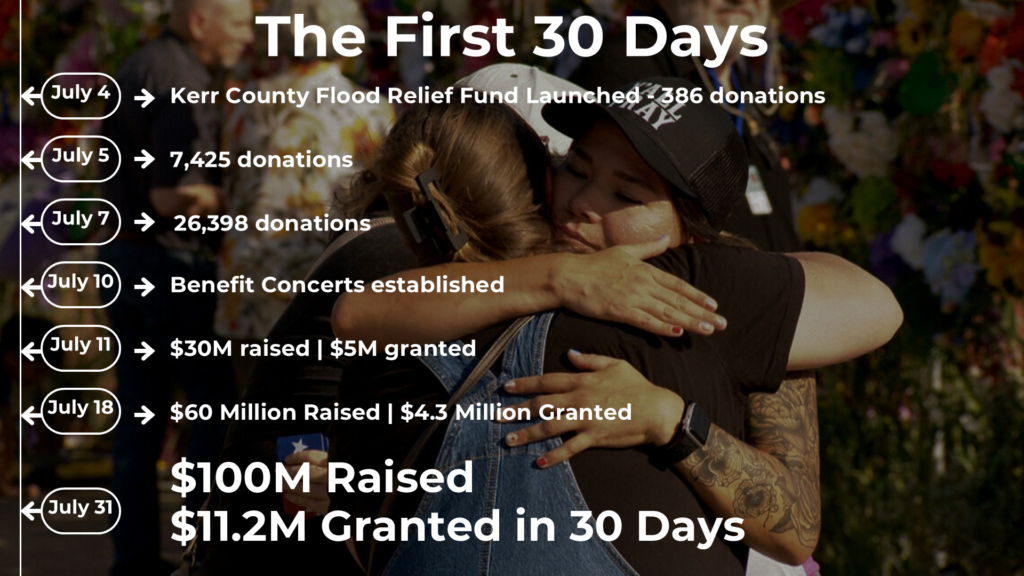
That confidence was tested within days. By July 7, the gravity of the situation was undeniable. Donations began arriving at a speed and volume the team hadn’t seen before: gifts were coming in “within half a second of each other,” as Austin put it. Support came from across Texas, including over $10 million from Houston-area donors, $3.7 million of which was contributed by Greater Houston Community Foundation fundholders who recognized the value of trusted, place-based leadership.
CFTHC moved quickly, awarding $5 million within the first week through a trust-based philanthropy approach. Early support looked like cash assistance for families, small businesses, and first responders, along with sheltering programs and assistance for school districts working to open their doors again in August. “It [trusted-based philanthropy] was a risk,” Austin said. “It was also the right thing to do.”
The Monday after the storm, one of the first people Austin spoke to was Steve Maislin, President & CEO of Greater Houston Community Foundation. Austin was seeking a proven way to quickly stand up the systems a crisis demands—from clear intake and review processes to grantmaking controls, communications, and the back-end mechanics needed to manage an urgent surge of support. The team built what they now refer to as the “Kerr County Model,” borrowing what has worked in Houston, then tailoring it to meet their specific local needs, “It was a copy, paste, and edit,” Austin noted.
Within the 30 days following the floods, the CFTHC helped transform an extraordinary wave of giving into organized, actionable recovery, moving resources quickly while laying the groundwork for longer-term rebuilding. By the end of the first month, CFTHC:
- Raised $100 million: An unprecedented level of support for a rural community foundation, enabling immediate stabilization and sustained recovery planning.
- Deployed $11.2 million in emergency grants: Among the fastest large-scale deployments nationally, helping local partners translate donations into aid, services, and support where needs were most urgent using trust-based philanthropy.
- Became a model for rapid disaster philanthropy: Demonstrating how community foundations can funnel high-volume donor support into coordinated recovery efforts that are accountable, locally informed, and built to last.
Streamlining Recovery with Connective
By way of his call with Steve, Austin was introduced to Connective to help their recovery efforts move faster. Connective builds bridges between available resources and the people who need them using shared infrastructure that helps communities coordinate faster after disasters.
Why Connective Matters
Recovery is more efficient when people have one clear path to help and providers can coordinate services without reinventing tools or duplicating efforts.
Social services are hard to navigate in the best of times. And, after a disaster, they can feel impossible as people struggle to find resources. Unclear eligibility, burdensome paperwork, and confusion about local capacity can delay recovery and waste valuable time.
At the same time, nonprofits and case managers are trying to keep up with shifting capacity and changing needs. Simultaneously, funders are looking for reliable, real-time data to guide investment decisions. These gaps create duplication, delays, and missed connections.
- The Hub is Connective’s centralized system that powers intake, eligibility, data tracking, and communication. It acts as the engine behind the scenes hosting the common application, managing the digital case management platform, and running real-time dashboards.
- The Spokes are the community-based organizations, service providers, and local governments delivering services like home repair, financial assistance, navigation, and case management. Each organization plugs into the same shared infrastructure, so they don’t have to build their own tools or work in silos.
This Hub-and-Spoke structure creates a single-entry point for clients, one coordinated platform for providers, and one source of truth for funders and decision makers. In Kerr County, thanks to CFTCH’s partnership with Connective, individuals seeking assistance were matched with a trained local case manager within two business days of completing a needs assessment. By reducing duplication, aligning priorities, and tracking progress in real time, Connective’s resource navigation tool helped CFTHC keep people connected to support within their own community.
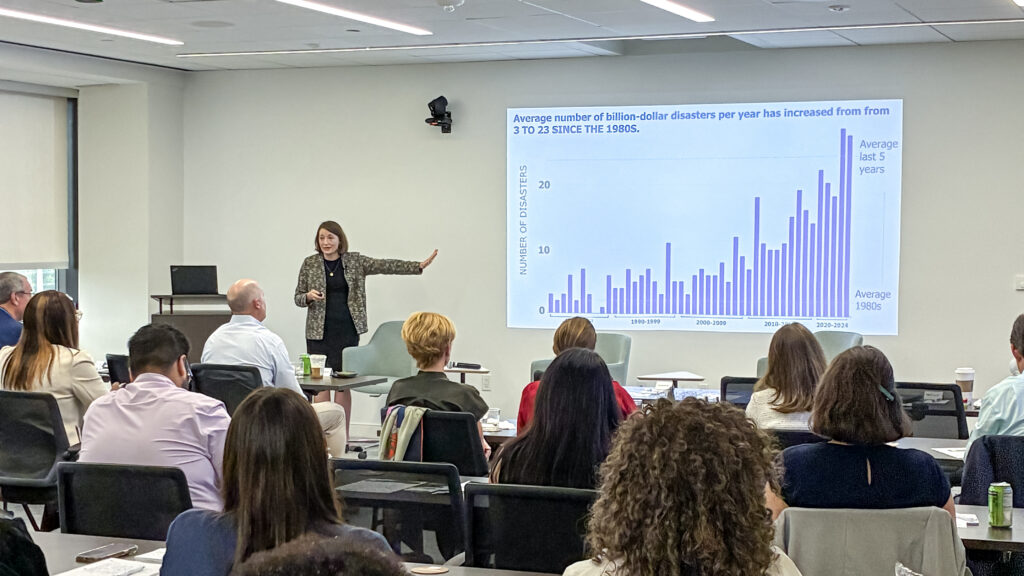
“The average number of billion-dollar disasters per year has increased from 3 to 23 since the 1980s. This jarring statistic about the uptick in disasters clearly shows how we need to get more savvy in how we prepare and respond to disasters.”
Elena White, CEO of Connective; Source: Climate Central
Community Foundation of the Texas Hill Country: Rebuild Kerr
By the numbers: As of April 2026, Rebuild Kerr has granted $64.83M, supported 150+ nonprofits, and helped 1,000+ families. This demonstrates that sustained, coordinated giving can accomplish beyond the first weeks of a disaster.
CFTHC raised funds from the public through its Kerr County Flood Relief Fund. Now, in the middle of recovery efforts, the Fund’s work is based at Rebuild Kerr, the name of a multi-year, coordinated, philanthropic flood recovery effort for this region. With immediate relief achieved, the Rebuild Kerr Initiative is directing funding across four priority areas:
Housing Recovery
CFTHC initially committed $40 million to be deployed across a comprehensive set of housing programs.
Why is it a priority? Housing is often the make-or-break issue in disaster recovery, because when families can’t return to safe, stable homes, everything else (health, school, work, and local economies) stalls. While federal programs like FEMA and HUD are essential, they are not designed to cover the full cost or most quickly enough for many families.
What does support do? Paired with disaster case management, the fund helps repair, rebuild, and rehouse families, filling critical gaps and supporting a transition from temporary fixes to lasting recovery.
Click here to learn more about CFTHC’s Housing Programs.
Mental Health & Well Being
CFTHC committed $10 million to ensure every person affected by the floods can access mental health services.
Why it matters: The emotional toll of the July 4 floods continues to shape daily life for people across Kerr County, Texas, and beyond. Austin shared how trauma, depression, and grief often rise in the months following a disaster.
What does support do? Support expands trauma-informed counseling for children, families, first responders, caregivers, clinicians, displaced residents, and visitors. Supported mental health services are evidence-based and funding will make them easier to reach.
Click here for more information on CFTHC’s mental health and wellbeing programs.
Community, Culture, & Business
CFTHC committed $35 million to helping businesses and nonprofits reopen, while supporting cultural institutions, community centers, parks, and river areas.
Why it matters: Community and culture initiatives strengthen the social, economic and environmental fabric of the Texas Hill Country. These investments help ensure Kerr County and Comfort remain places where residents want to stay, work, rebuild and belong. Recovery involves more than repairing physical damage; it’s about restoring hope, civic pride, and the shared places that bring people together.
What does support do? Support will assist nonprofit partners working in environmental restoration, arts and cultural recovery, reconstruction of public parks and gathering spaces, community preparedness, economic revitalization, and public events that promote collective healing.
Click here to learn more about CFTHC’s Community and Culture focus areas.
Future Long Term Needs Fund
This work requires a longer-view conversation with government and communities about risk and land use.
Why it matters: This will fund resiliency-building. It will fund what can be done for vulnerable individuals, households, and areas, including near the Guadalupe River.
What does support do? It will help residents and businesses understand how to be better positioned for future disasters. This is an investment in the resilience of families and individuals to prepare for what potential disaster could come next.
A Fireside Chat: Steve Maislin & Austin Dickson
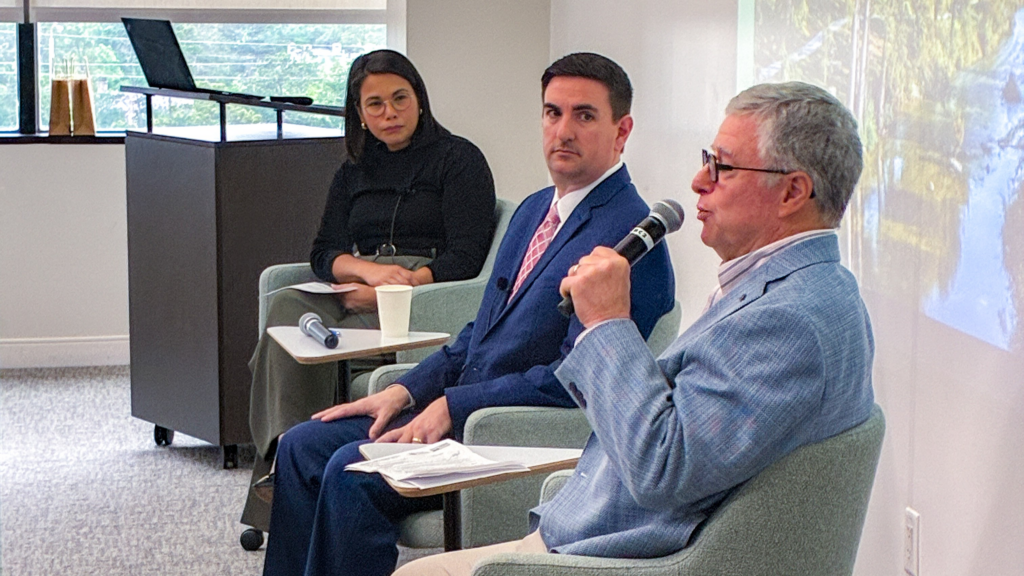
Stevejoined Austin in a discussion about cross-sector leadership and disaster readiness. This conversation was moderated by Diana Zarzuelo, the Community Foundation’s Chief Impact Officer and a key leader with the Disaster Alliance, ensuring efforts are coordinated and people remain at the center of every decision.
Why Community Foundation’s Matter
Austin and Steve both described community foundations as connectors that help generosity translate into real, place-based outcomes. Austin shared that he was first drawn to the work because it connects people with good causes and because so much of the impact comes from the “invisible” systems and structures that make communities function, especially in moments of need. That lens has shaped how he explains community foundations today: as organizations anchored in a specific place that can do systems work, coordinate partners, and serve as steady institutions for long-term community good.
Steve, who came to philanthropy through his background as an estate planning attorney, said his focus has always been making Greater Houston a better place through strategic philanthropy. He emphasized a community emphasized a community foundation’s role as a connector between donors—individuals, families, foundations, and businesses—and the broader community.
“Community foundations are uniquely positioned to convene people, earn a seat at key tables, and bring donors along in efforts that strengthen the region over time.”
Steve Maislin, President & CEO of Greater Houston Community Foundation
Philanthropy in times of Disaster
Austin and Steve emphasized that community foundations sit in a unique philanthropic “lane” within disaster response. Community foundations are close enough to know what its community needs to act quickly, but independent of government timelines and constraints. This flexibility allows community foundations to raise and deploy private dollars for immediate relief and long-term recovery.
Steve pointed to Greater Houston Community Foundation’s decades of experience with disaster philanthropy, from the 2004 tsunami and Hurricane Katrina, through Hurricane Harvey. These formative moments refined how Greater Houston Community Foundation stewards generosity efficiently and responsibly as possible in the aftermath of a disaster.
Steve described Harvey as a turning point that helped catalyze durable recovery infrastructure, including Harvey Home Connect (now Connective), and highlighted how it led to the formal collaboration with United Way of Greater Houston to establish the Greater Houston Disaster Alliance.
Austin noted that repeated disasters have shown how CFTHC is the trusted recovery leader for its region. He emphasized the importance of clear communicating clearly to the public about emerging needs and what comes next. Austin shared, “We act as the ‘chief interpreter’ between donors, nonprofits, and the broader community.”
Steve underscored the value of “blue-sky” work, made possible with corporate and community partners including supporters like Enbridge and Phillips 66. By investing in nonprofit networks, shared systems, and readiness during the days with blue skies, early philanthropic dollars can fill urgent gaps. Austin emphasized the importance of this, especially when government case management and federal resources arrive later than communities can afford.
Recovery vs. Resilience
Steve, Austin, and Diana distinguished recovery from resilience. Recovery is about restoring core stability, while resilience is the ongoing work of strengthening people and systems so communities can withstand and rebound from the next disaster.
Austin described recovery as getting essential assets up and running—homes, businesses, schools, and mental health supports—while noting that resilience requires a longer-view conversation with government and communities about risk, flood warning technology, land use, and what can and cannot be done in vulnerable areas (including near the Guadalupe River). Austin also pointed to an “education gap” in helping residents understand how to be better positioned for future disasters, and he encouraged donors to invest in the resilience of families and individuals, not just in post-storm rebuilding.
Steve added that, in Houston, disaster philanthropy has evolved. With strong City and County partnerships and a shifting federal landscape, resilience work depends on effective local coordination and “blue-sky” planning. This includes identifying where the most vulnerable neighbors live, assessing whether nonprofit capacity exists there, and then building or expanding services before a crisis hits. He emphasized that generosity accelerates this by funding year-round systems, trusted relationships, and communications networks that allow philanthropic resources to be deployed quickly and effectively.
“I like to frame resilience as a verb, a continuous adaptation. It is important to strengthen both individuals and households and build trust. However, resiliency building is also developing and strengthening the connective tissue between government, nonprofits, philanthropy, and community.”
Diana Zarzuelo, Chief Impact Officer, Greater Houston Community Foundation
Diana reinforced this mindset, noting how Houston’s growing focus on preparedness reflects a newer, more adaptive approach to resiliency building.
What is the Greater Houston Disaster Alliance?
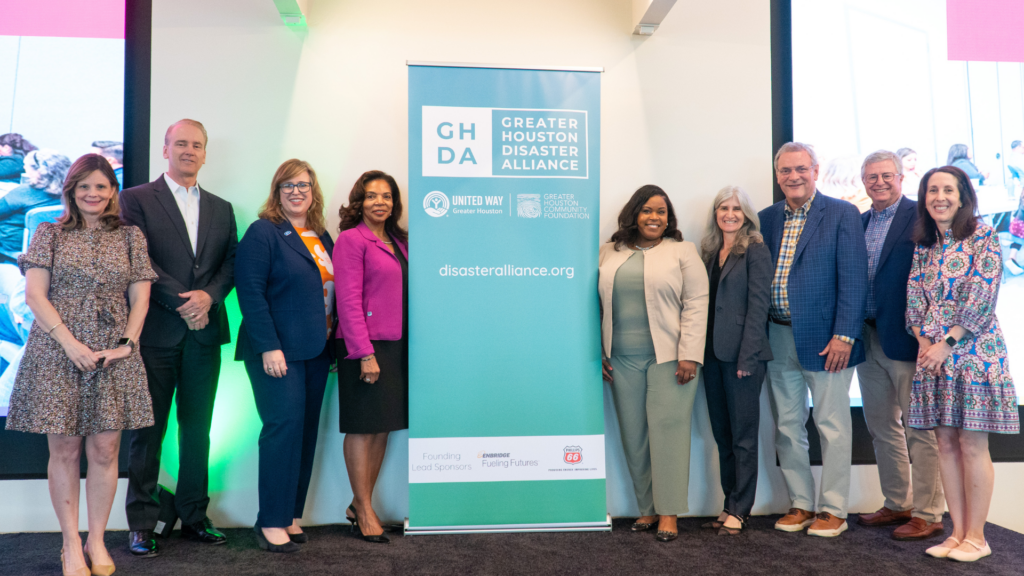
Greater Houston Disaster Allianceleads the greater Houston community’s philanthropic disaster response, strengthens year-round preparedness, and ensures our region has the networks and systems in place to respond rapidly and effectively in times of disaster.
Why it Matters
Disaster recovery works best when trusted partners, shared systems, and clear roles are in place before a storm, flood, or fire. Communities with strong partnerships and systems recover up to six times faster than communities that don’t. The Disaster Alliance constantly convenes to strengthen its technology, home repair and cash assistance programs, and wrap around support to get every possible dollar out effectively as possible.
With more than 35 years of combined experience leading disaster recovery efforts, Greater Houston Community Foundation and United Way of Greater Houston formed Greater Houston Disaster Alliance in 2023. The Disaster Alliance’s first phase prioritized establishing core operational and governance infrastructure, strengthening regional disaster preparedness, and advancing resilience strategies that help communities withstand and recover from future crises.
Looking ahead, the Disaster Alliance will focus on scaling proven approaches, strengthening regional coordination, and driving long-term systems change. Priority initiatives include:
- Verizon Preparedness & Resilience Workshops: Expanding inclusive, community-centered preparedness efforts through multilingual and culturally relevant education that reaches historically underserved populations.
- Community Foundation Resilience Network: Advancing regional and national resilience efforts by leveraging strategic funding and cross-sector partnerships to pilot scalable solutions and inform long-term systems change.
- Transforming Disaster Data & Communications: With support from an ACT Initiative planning grant, designing improved data and communication systems—grounded in cross-sector collaboration and community voice—to strengthen coordination, transparency, and decision making before, during, and after disasters.
- Hurricane Harvey: 10-Year Retrospective: Leading a landmark assessment of a decade of recovery and resilience following Hurricane Harvey to inform future philanthropic investment, policy decisions, and disaster response strategies.
The Disaster Alliance has a clear focus on four long-term measures of success, which are:
- Maintaining strong regional infrastructure
- Strengthening systemwide preparedness
- Building long-term community resilience
- Increasing visibility, influence, and alignment across sectors
A Mindset Shift
Program attendees left with a clearer, more disciplined way of thinking about disaster philanthropy—one grounded in readiness, coordination, and year-round investment. Here’s what changed in how they think about preparedness and recovery:
- Be ready for the moment. The fastest recoveries happen when leaders have practiced, built systems, and clarified roles before disaster strikes.
- Communicate early—and lead clearly. Establish one trusted philanthropic lane for the public to give and share updates consistently; fragmented fundraising can slow recovery by months.
- Treat preparedness as year-round work. Not every disaster looks like a hurricane, so readiness requires ongoing planning, relationship-building, and “blue-sky” coordination.
- Build trust and infrastructure before the surge. When generosity arrives, strong intake, grantmaking, and partner systems ensure dollars reach people who need them most.
- Plan for the worst-case scenario. Imagining the “big one” helps communities respond faster, more humanely, and with fewer gaps.
Bottom line: Build resilience before the storm.
Build Resilience with Us
The lesson from Houston and the Hill Country is clear: generosity fuels response, but coordination maximizes impact.
Sustained recovery does not rest on any single organization, but on the systems and partnerships built long before a crisis begins. Community foundations serve as trusted partners in that work—connecting donors, nonprofits, and public leaders, so communities can respond with speed and purpose when disaster strikes.
Support: We invite you to invest in preparedness initiatives for the regions closest to your hearts, like Greater Houston Disaster Alliance.
Stay Informed: Subscribe to the Greater Houston Disaster Alliance newsletter.
Connect with Greater Houston Community Foundation: Reach out to Diana Zarzuelo, Chief Impact Officer, to explore ways to get involved with the Disaster Alliance
More Helpful Articles from Greater Houston Community Foundation
- Why Place-Based Philanthropy Matters: Investing in Neighborhoods to Drive Lasting Change
- Solar Batteries Helping Houston’s Most Vulnerable Communities
- Informed Giving: Powered by Data, Fueled by Heart
- Human Trafficking: Philanthropic Awareness, Action, & Impact
This website is a public resource of general information that is intended, but not promised or guaranteed, to be correct, complete and up to date. The materials on this website, including all comments and responses to comments, do not constitute legal, tax, or other professional advice, and is not intended to create, and receipt or viewing does not constitute, nor should it be considered an invitation for, an attorney-client relationship. The reader should not rely on information provided herein and should always seek the advice of competent legal counsel and/or a tax professional in the reader’s state or jurisdiction. The owner of this website does not intend links on the website to be referrals or endorsements of the linked entities.