What Houston’s Economic Mobility Coalition is Building Next
Community Impact
“Every Houston resident deserves a fair chance to succeed—regardless of ZIP code, age, gender, race, or family income. That future is within reach with partnerships, cohesive strategies, and a robust learning framework.”
Dr. Flávio Cunha, Director of the Center for Economic Mobility at Rice University’s Kinder Institute for Urban Research
Houston has the assets to be a national leader in economic mobility, but too many residents still face barriers to opportunity.
Following strong interest after the inaugural summit in fall 2025, a group of organizations formalized that momentum into the Houston Economic Mobility Coalition (Coalition): Good Reason Houston, Greater Houston Community Foundation, Greater Houston Partnership, Gulf Coast Workforce Board, Harris County Housing and Community Development, the Kinder Institute for Urban Research at Rice University, and United Way of Greater Houston. With pro bono support from Boston Consulting Group (BCG), the Houston Economic Mobility Coalition has started building a draft framework to guide its work.
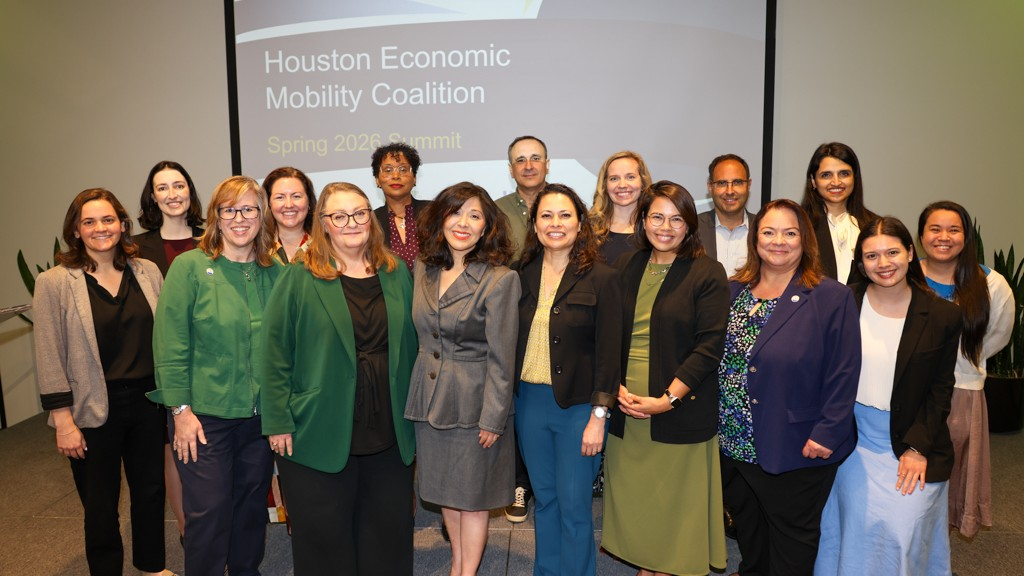
At the Second Houston Economic Mobility Summit in the spring of 2026, over 250 leaders across sectors came together to better understand Houston’s mobility landscape, strengthen cross-sector relationships, and shape the Coalition’s emerging approach.
Building the Methodology to Understand Economic Mobility in Houston
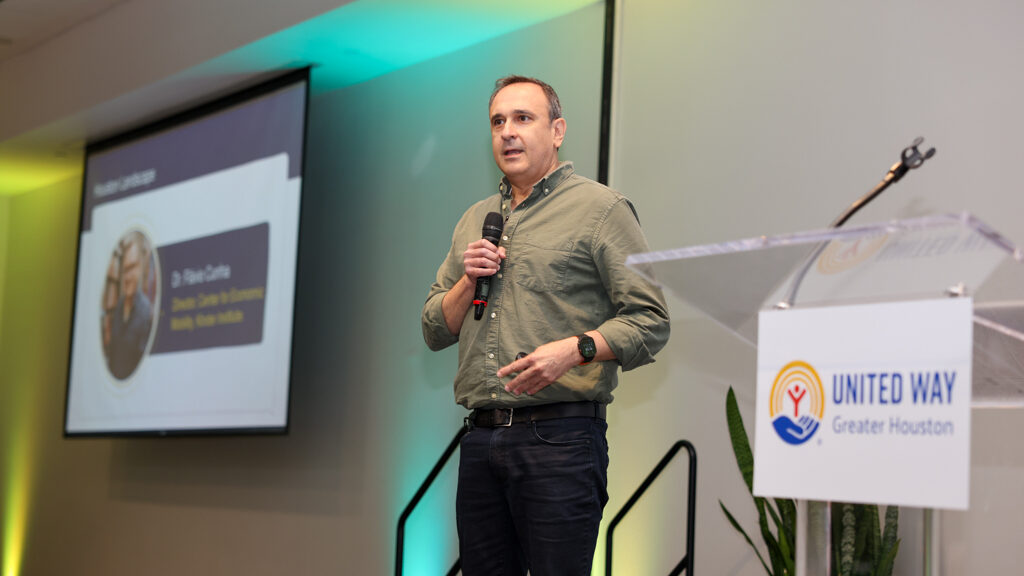
Dr. Flávio Cunha, Director of the Center for Economic Mobility at Rice University’s Kinder Institute for Urban Research, shared an overview of the methodology his team is developing to study Houston’s economic mobility. At the heart of the approach is a comparison between the Houston region’s trajectory and a “synthetic twin,” a statistical counterfactual constructed from peer regions, designed to match Houston as closely as possible before 2015. By comparing Houston to this counterfactual, the method isolates what changed in Houston specifically after 2015, separating it from national trends that affected all large regions.
Dr. Cunha emphasized that getting this study design right is essential. The choices behind it, such as which regions to compare, how to define the study period, how to define the relevant geographic unit (county or MSA), how to handle the disruptions of recent years due to the COVID pandemic, shape what the analysis can reliably show. That care is what will allow the full Economic Mobility Report, expected this November, to provide a complete and trustworthy picture of how Houston’s economy has changed and what it means for the region’s families.
What Houston Already Has
Houston has many of the ingredients needed to lead to upward mobility: scale, job growth, strong institutions, and employer demand. Steve Kean, CEO of the Greater Houston Partnership, argued that the challenge is not whether opportunity exists, but whether Houstonians can access it.
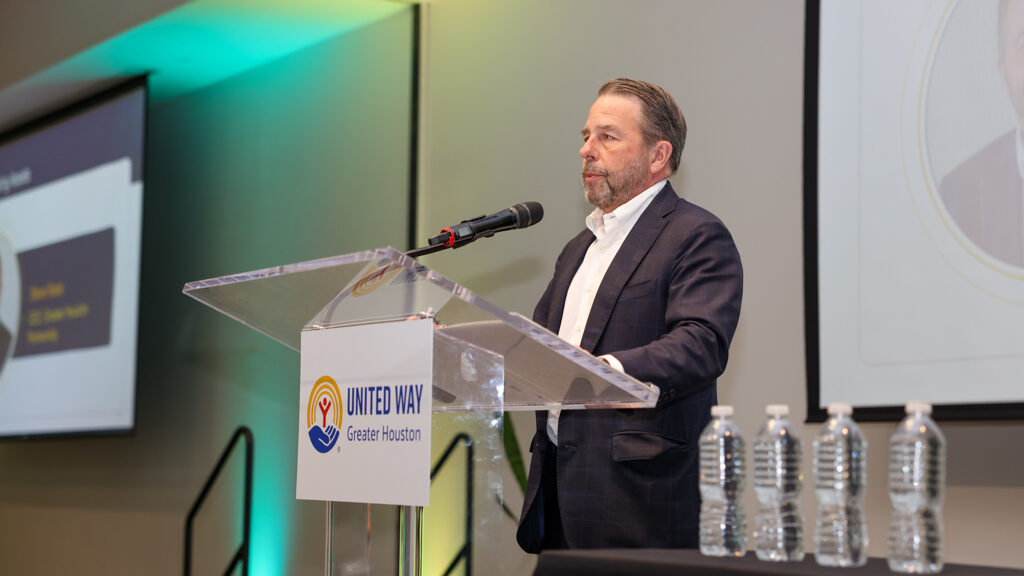
He pointed to Houston’s record business announcements and recent job growth, while lower than it was previously still consistently outpacing the nation, as signs that the region has real momentum, including expanding manufacturing activity beyond the energy sector. In short, Houston is generating opportunity but not yet connecting enough residents to it.
Kean said the region needs clearer pathways into career opportunities, along with more credentials that help people get hired and advance over time. Houstonians need better visibility, preparation, and access if the region wants job growth to translate into mobility.
“We [Houston] have the supply, we have demand…we have broad community commitment. This is what makes Houston the place to do it, and now is the time to do it… This Coalition, the philanthropic community, employers—when we get together across all those dimensions in Houston, we get things done. Employers have to be at this table.”
Steve Kean, President and CEO of Greater Houston Partnership
Kean emphasized that for Houston, economic mobility is not a side issue, but central to the region’s future success. Houston’s next step should be to build faster feedback loops among employers, training providers, and workforce systems, so supply and demand can be in equilibrium. When those signals move more quickly, institutions can respond more effectively to actual labor market conditions.
Kean closed by underscoring that the Coalition is about more than any single tool or initiative, but to transform Houston into a national leader in upward mobility. Houston can be a place where opportunity is truly reachable for everyone as it already has many of the hardest pieces in place: growth, jobs, institutions, and committed partners.
What the Coalition is Proposing
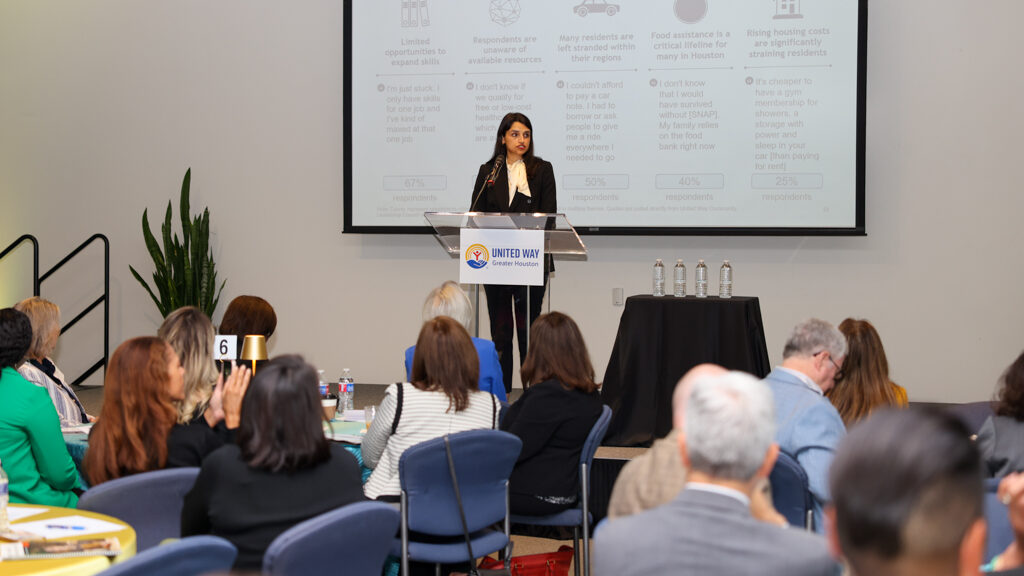
The Coalition has partnered with Boston Consulting Group (BCG) to add capacity and serve as a neutral partner as the core institutions align around a structure to operationalize the work ahead. Farah Ahmed, Managing Director and Partner at BCG, shared the Coalition’s draft framework, a five-component structure that will help translate shared ambitions into coordinated action.
- Vision: Communicate with a shared, aspirational future state every coalition member and partner can rally around.
- North Star & Guiding Stars: Provide a twofold measurement approach with a single north star metric paired with pillar-level guiding stars to track collective progress toward the vision.
- Mission: Translate the mission into the coalition’s role and approach to show how the work gets done.
- Pillars: Define the foundational areas of focus, ordered by how Houstonians experience mobility and are connected by the systems and policies that reinforce each other.
- Gaps: Surface the issues within each pillar that affect a sizeable share of Houstonians, ensuring efforts go where population-level needs are greatest.
Together, this framework will help the Houston region develop a shared language, focus, and measurable anchor to increase coordination and pursue initiatives, together, that no single entity could undertake alone.
What the Coalition Has Heard
This framework was not built in isolation and reinforces what was learned at the inaugural summit in October 2025, what participants raised at that summit, and what has been heard from residents about the barriers they face in accessing opportunities for upward mobility.
What the Coalition learned at the inaugural summit:
- Economic mobility varies dramatically by place: Where you grow up and where you live matters, place matters.
- Social capital is critical: Connections, networks, and a sense of belonging are some of the strongest predictors of upward mobility.
- Mobility is not just about income:Mobility is also about dignity and belonging, economic security, and having a real voice over the things that shape your life.
- Five pillars that support mobility: Rewarding work, quality education, inclusive neighborhoods, access to good healthcare, and responsive, just government all strengthen upward mobility.
- Importance of cross-sector collaboration: Houston will be unable to strengthen and support mobility for its residents without collaboration.
What the Coalition heard from Houston stakeholders:
- Sustained, coordinated action across systems is essential to advancing economic mobility in Houston.
- Our region needs a stronger educational pipeline from early childhood through postsecondary education and workforce training that leads to real careers.
- Housing is also foundational, especially affordable options in high-opportunity areas.
- Investments in communities that have historically been overlooked.
“Houston needs a shared vision and a more coordinated regional approach. A common definition of economic mobility. And a clear north star metric to guide our work together. And that is why we are here today.”
Amanda McMillian, President and CEO of United Way of Greater Houston
What Houstonians are Saying
Though the work is still in its early stages, Coalition leaders emphasized that progress must be informed by the people most affected. Community voices, alongside feedback from leaders across Houston, will continue to shape the Coalition’s direction. Early input from Houstonians has already revealed five consistent themes about the barriers people face and the resources they rely on, with many describing multiple challenges at once.
- Limited opportunities to build skills and move up. Many respondents described feeling stuck in jobs with little room for advancement. “I’m just stuck. I only have skills for one job, and I’ve kind of maxed at that one job.” People are working, but many do not see an accessible path forward.
- Support exists, but people cannot find it. Half of respondents said they do not know what resources are available or whether they qualify. For many Houstonians, the barrier isn’t the absence of help; it’s knowing where to go and how to get it.
- Transportation and other structural barriers limit daily choices. Half also pointed to barriers that constrain what they can do, especially around transportation. One respondent shared, “I couldn’t afford to pay a car note. I had to borrow or ask people to give me a ride everywhere I needed to go.”
- Food assistance is a critical lifeline. Many residents described food support as essential to their family’s stability. As one person wrote, “I don’t know that I would have survived without [SNAP]. My family relies on the food bank right now.”
- Rising housing costs are undermining stability. A meaningful share of respondents described housing as increasingly unaffordable and destabilizing. One person captured that strain starkly: “It’s cheaper to have a gym membership for showers, a storage with power, and sleep in your car.”
Ahmed underscored that these weren’t secondhand stories or assumptions, but Houstonians describing their own lived reality. For some in the room, the themes were familiar. For others, they were a sobering reminder of how many Houstonians are working and still struggling to cover basic needs.
Continue reading: Building Bridges for Deeper Impact: Inaugural Houston Economic Mobility Summit
The Initial Drafts
The Draft Vision and Mission
The Coalition’s draft vision and mission statements will communicate a shared, aspirational future state every partner can rally around while the mission statement will describe the Coalition’s role and approach to turning that vision into measurable action. The vision and mission statements may evolve based on feedback gathered at the second summit.
Proposed Vision: A Houston where people are supported to thrive, no matter where they start.
Proposed Mission: Uniting Houston’s leaders to drive actions that help Houstonians reach their full potential.
The goal with both drafts above is to be simple enough for any partner, funder, or person in Houston to understand, while also being specific enough to differentiate the Coalition from what each individual organization already does on its own.
The Draft Pillars and Gaps
The Coalition also shared the pillars and gaps of the framework that were adapted from the Urban Institute’s Upward Mobility Framework and tailored to Houston’s realities. The framework includes five pillars and two enablers meant to reflect how Houstonians experience mobility, and where coordinated action could make the biggest difference.
Enabler #1: Connected People and Community
Ahmed said connection matters in two ways: people move forward through relationships, and they need clear access to support systems. This enabler builds stronger community networks and connects systems, so Houstonians can more easily access support and see which solutions deliver results.
Enabler #2: Policy
Ahmed described the second enabler as the role of government in helping people build better lives—with public systems that work across sectors and levels of government, and with the participation of the people those systems are meant to serve.
Five Pillars of Economic Mobility
The five pillars define the conditions Houstonians need for stable, upward mobility.
| Pillar | What it is | Why it matters | What Success Looks Like |
| Basic Needs | Stable access to food, transportation, and essential services that help families thrive. | When basic needs are unmet, progress in education, jobs, and other areas becomes much harder to sustain. | Families have reliable access to food and basic stability, along with a simpler, faster process for claiming benefits. |
| Housing | Affordable homes located in inclusive, opportunity-rich neighborhoods. | Where someone lives shapes the schools their children attend, the jobs they can reach, and the networks they can build. Housing is far more than shelter alone. | More Houstonians live in stable, affordable homes and in thriving, connected neighborhoods across the region. |
| Education | Learning and skills-building across every stage of life, from early childhood through workforce training. | The Coalition sees this as a long-term pipeline that helps Houstonians grow, adapt, and prosper. | Children get strong starts through high-quality early childhood care, and graduates leave school prepared for the workforce of the future. |
| Jobs | Quality jobs and clear career pathways that support a stable life. | Jobs must do more than exist; they need to offer living wages, advancement, and a realistic connection to the people who need them. | Houston builds a stronger supply of quality jobs and career pathways, while residents are connected to mentors, networks, and employers ready to hire. |
| Health | Affordable, quality physical and mental healthcare that supports long-term well-being. | Health shocks are one of the most common ways families lose ground, making access and affordability central to mobility. | Affordable, quality healthcare is within reach, including ensuring that Houston’s mothers and children receive the care they need from the start. |
Ahmed shared how these pillars and gaps are not meant to capture every opportunity in Houston. Rather, it highlights the areas where a large share of Houstonians stands to benefit, and where coordinated action is most likely to drive meaningful progress.
Proposed North Star & Guiding Stars: How the Coalition will Measure Progress
To track collective progress and anchor the work in shared measurement, the Coalition proposed a twofold measurement approach consisting of a north star and guiding stars. These two components balance rigor with simplicity and directly reflect feedback gathered at the inaugural summit, where participants widely agreed that Houston needs a shared framework anchored by a north star metric paired with issue-specific supporting indicators.
Critically, participants cautioned against relying on any single metric alone, with one participant suggesting “a constellation, not a single star.” When asked to rank the criteria, from one to five, that should guide metric selection, participants rated validity as most important (4.2), followed closely by simplicity and transparency (4.1), disaggregation by demographics (4.0), and reliability (3.8).
This proposed twofold approach was designed with these priorities in mind. Both components provide validity, disaggregation, and reliability while the north star prioritizes simplicity and the guiding stars at the pillar level capture whether Houston is making progress across the full dimension of economic mobility, creating a shared measurement structure for action across sectors. No single measure can capture the full picture, so the Coalition needs several indicators that work together to guide action and create a common language across sectors.
What’s Next for the Coalition
Participants discussed how the coalition should define success, where Houston needs urgent action, and what early ambitions should guide the work. Coalition leaders said that feedback will help refine the framework and shape the next phase.
- Analysis of the post-summit engagement survey. Attendees received a short survey to share feedback and indicate interest in getting more involved. This survey will help the Coalition continue to embed feedback loops as the work evolves ensuring community leaders can participate in and shape the work.
- Continue to connect as the work develops. The Coalition aims to continue creating opportunities to engage in the work and provide input. If you’d like to have a conversation about the Houston Economic Mobility Coalition, reach out to Greater Houston Community Foundation’s Community Impact team at [email protected].
- Review Economic Mobility Report. The Kinder Institute for Urban Research will release its Economic Mobility Report this fall. This report will give Houston sharper data on where it stands and where to focus next. It will also inform how Coalition work moves forward to best serve the people who make Houston great.
“People in Houston are not lacking potential; our system is lacking connection. This is not a metaphor, but a diagnosis…Let’s do it Houston!”
Juliet Stipeche, Executive Director at Gulf Coast Workforce Board
How to Stay Engaged
Greater Houston Community Foundation helps connect donors, nonprofits, and civic partners to the ideas and collaborations needed to strengthen opportunities across the region. As part of that work, we have also created the Economic Mobility Learning Series: virtual conversations that spotlight proven and emerging strategies to expand opportunity and mobility in Houston.
The series is open to anyone interested in ideas that can strengthen economic mobility in the region. Visit the Community Foundation’s events page to learn more.
If you are ready to make a deeper impact, we’re here to help. Connect with Greater Houston Community Foundation to explore how your philanthropy can spark real, lasting change.
Related reading from Greater Houston Community Foundation
- From Investment to Impact: Inaugural Year of High-Impact Grantmaking
- The Houston We Hope For: 2026 Community Impact Showcase
- How Houston Doesn’t Get Left Behind in the AI Revolution
- Why Place-Based Philanthropy Matters: Investing in Neighborhoods to Drive Lasting Change
- Purposeful Giving: Texas Hill Country Insights
This website is a public resource of general information that is intended, but not promised or guaranteed, to be correct, complete and up to date. The materials on this website, including all comments and responses to comments, do not constitute legal, tax, or other professional advice, and is not intended to create, and receipt or viewing does not constitute, nor should it be considered an invitation for, an attorney-client relationship. The reader should not rely on information provided herein and should always seek the advice of competent legal counsel and/or a tax professional in the reader’s state or jurisdiction. The owner of this website does not intend links on the website to be referrals or endorsements of the linked entities.